
SMMR Virtual Labs + AI Mining Education Workshops
Full-stack, AR/XR, and AI-supported learning experiences for mining, minerals, STEM outreach, teacher curriculum design, and workforce pathway visibility.
- ↗ Led AI-assisted curriculum design and Virtual Labs sessions for Arizona educators.
- ↗ Built and demonstrated interactive mining, minerals, STEM, and sustainability learning tools.
- ↗ Connected Virtual Labs, 3D Minerals, and PathWise career maps into classroom-ready experiences.
- ↗ Presented the broader AI-powered Virtual Labs direction through mining education and outreach channels.
Overview
At the University of Arizona School of Mining & Mineral Resources, I worked on a growing ecosystem of digital learning tools designed to make mining, minerals, sustainability, and STEM concepts easier to teach, easier to experience, and easier to connect to real careers.
This work sits at the intersection of full-stack development, AR/XR learning, Virtual Labs, 3D mineral exploration, AI-assisted curriculum design, and teacher-facing workshops.
The goal was not just to create impressive demos. The goal was to build classroom-ready experiences that educators could understand, adapt, and actually use with students.
The problem
Mining education is important, but it is often difficult to bring into classrooms.
Many students encounter mining through abstract explanations, isolated facts, or one-off activities that do not clearly connect to the systems behind modern resource development.
Teachers also face real constraints: limited prep time, uneven technical comfort, school Wi-Fi, crowded schedules, curriculum requirements, and the need for activities that can work with real students.
The product challenge was to make mining education more interactive without making it harder to teach.
That meant the work had to balance three things:
- Technical depth
- Classroom usability
- Real-world relevance
A tool could be visually interesting and still fail if a teacher could not quickly understand how to use it, explain it, or adapt it into a lesson.
Users and stakeholders
The core users and stakeholders included:
- K–12 teachers looking for classroom-ready STEM resources
- Students exploring mining, minerals, sustainability, and engineering concepts
- Outreach teams trying to make technical topics accessible
- University faculty and staff building education pipelines
- Workforce and industry partners interested in career awareness
- Students who may not yet know how science, engineering, technology, and mining careers connect
My role
I contributed as a student software developer, workshop facilitator, and AI education builder.
My work included building and supporting full-stack learning tools, integrating AR/XR and interactive experiences, helping design workshop flows, and facilitating sessions focused on AI curriculum design, Virtual Labs, 3D Minerals, and PathWise career maps.
The role required both product thinking and facilitation. I had to think about what the system should do, how educators would experience it, how the activity would fit into a workshop, and how the work could become useful beyond a single demo.
What I built
The work connected multiple learning surfaces into a broader education and outreach ecosystem:
- Virtual Labs for mining, minerals, sustainability, and STEM concepts
- 3D Minerals experiences for interactive mineral identification and exploration
- Teacher-facing workshop resources for AI-assisted curriculum design
- PathWise career maps to connect classroom concepts to workforce pathways
- Outreach tools and digital experiences that could support events, demos, and classroom use
The Virtual Labs ecosystem includes interactive stations around topics such as ore formation, exploration, mine planning, metallurgy, reclamation, lunar mining, and filtration.
These stations help turn complex mining and sustainability concepts into hands-on digital or hybrid activities.
Product visuals
These visuals show the product layer behind the SMMR work: 3D Minerals, metallurgy-focused Virtual Labs, and learning pages that help students understand mining and materials concepts through interactive tools.

3D Minerals interactive mineral identification interface.

Metallurgy virtual lab interface for mining education.

Metallurgy virtual lab learning page for students.
Product decisions
The strongest product decision was to center the teacher experience.
That meant asking questions like:
- Can a teacher understand this quickly?
- Can the activity work in a classroom with limited setup?
- Does the tool connect to standards, careers, or real-world relevance?
- Does it create student curiosity without overwhelming the instructor?
- Can AI support lesson design without replacing teacher expertise?
- Can the experience work even when the technology environment is imperfect?
The product was not just the digital tool.
The product was the full learning workflow: how a teacher discovers the resource, understands it, adapts it, introduces it to students, and uses it to create a meaningful classroom moment.
Technical and educational approach
The technical work used interactive web tools, full-stack development patterns, 3D learning interfaces, and AI-supported workflows to make mining education more accessible.
For teacher workshops, I connected these tools with AI-assisted curriculum design.
Teachers explored how AI could help brainstorm lesson plans, adapt activities, generate assessments, and personalize classroom materials while keeping teacher judgment at the center.
The educational approach focused on making AI useful without making it magical. AI was framed as a support layer for curriculum design and classroom preparation, not as a replacement for teaching expertise.
Workshop delivery
For CU at the Mine 2026 Cohort 1, I helped lead two interactive sessions with 36+ Arizona educators.
The sessions focused on:
- AI-assisted curriculum design
- Prompt engineering for classroom planning
- Virtual Labs and 3D Minerals integration
- Mining and STEM concepts translated into classroom activities
- PathWise-style career maps and workforce pathway visibility
The sessions were designed to help teachers leave with practical ideas, not just exposure to tools.
That meant the workshop had to be hands-on, structured, and directly connected to lesson design.
Workshop visuals
These visuals show how the tools were brought into teacher-facing workshops through AI curriculum design, Virtual Labs, and classroom-ready STEM activities.
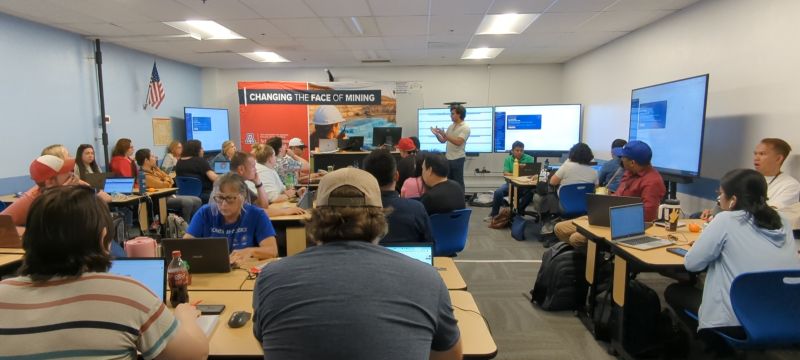
CU at the Mine 2026 teacher workshop facilitated by Gaurvendra Pundhir.
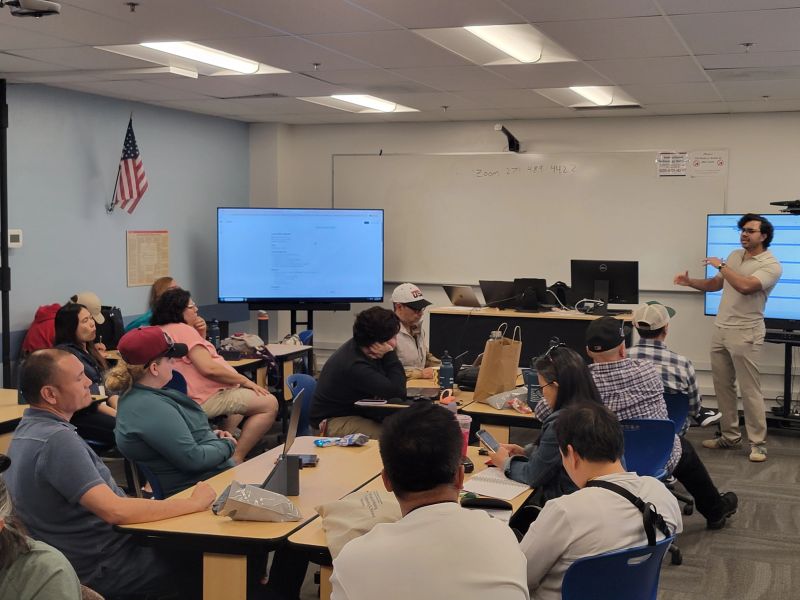
AI curriculum design activity at CU at the Mine 2026.
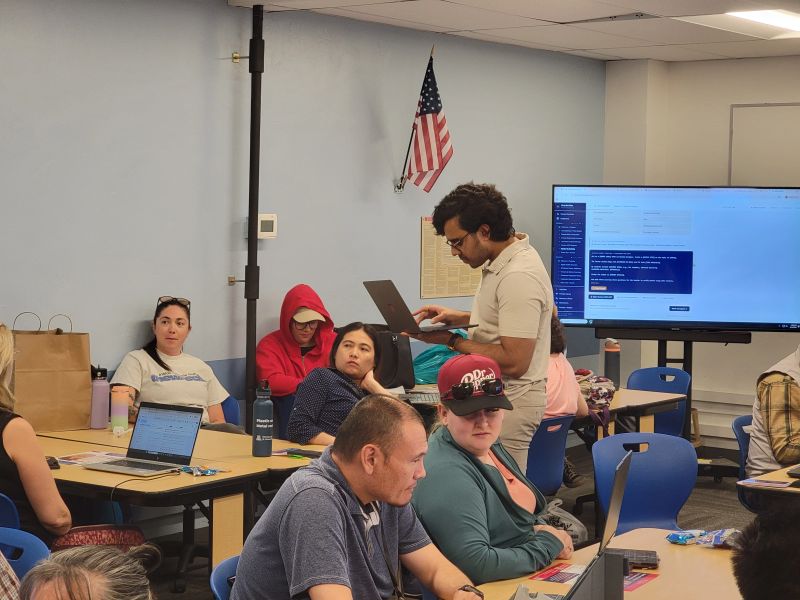
Virtual Labs demo for mining education at CU at the Mine 2026.
Public presentation proof
The broader AI-powered Virtual Labs direction was also presented through mining education and outreach channels, connecting the software work to a larger conversation around STEM education, workforce visibility, and classroom innovation.
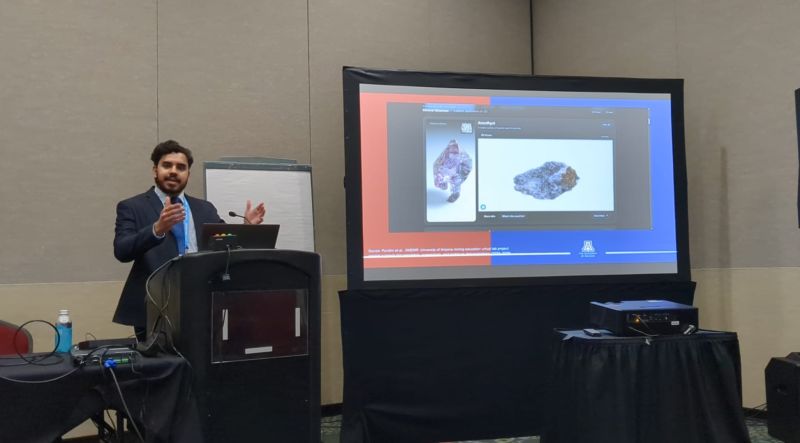
AI-powered Virtual Labs presentation for mining education.
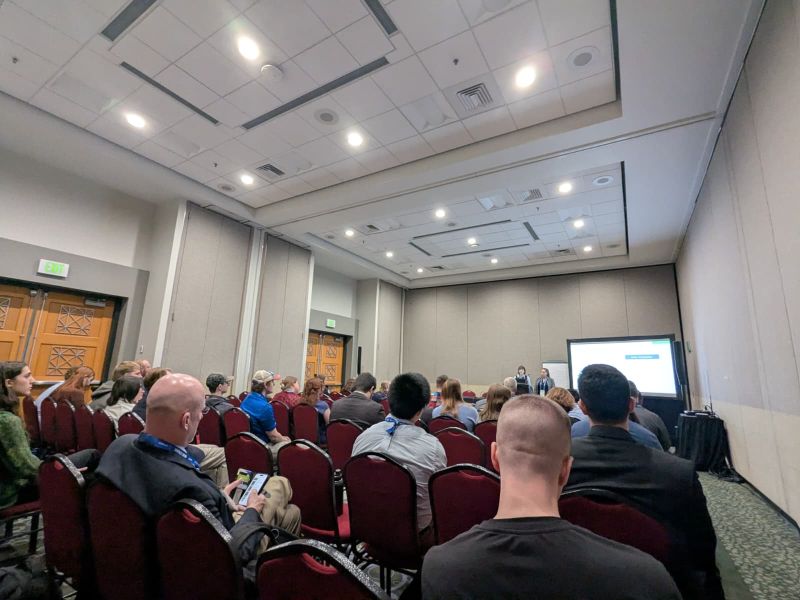
Mining education audience during the SME session.
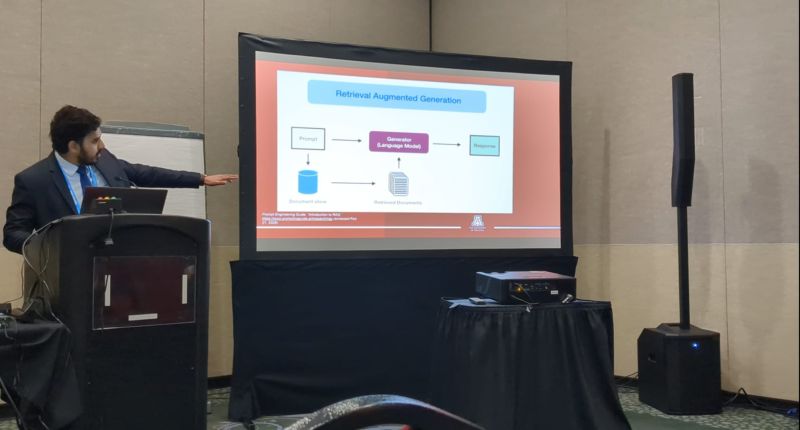
Workflow diagram used to explain the Virtual Labs system.
Impact
CU at the Mine 2026 Cohort 1 reached 36+ educators from Arizona school districts, with additional cohorts expected to expand the reach to 100+ teachers.
The work helped connect AI curriculum design, Virtual Labs, 3D Minerals, and career pathway tools into a classroom-ready experience.
It also helped position the broader Virtual Labs direction as part of a larger education and workforce visibility effort.
Beyond the workshop itself, the project created reusable assets, product lessons, and public-facing demos that can support future outreach, research, teacher training, and mining education programs.
Product takeaways
This project shaped how I think about education technology.
The biggest lesson was that the best education technology is not the flashiest tool. It is the tool that a teacher can understand, trust, adapt, and reuse.
If a product cannot survive limited prep time, messy classroom logistics, and real student behavior, it is not ready.
It also changed how I think about AI in education.
AI is most useful when it supports the human workflow around teaching: planning, adapting, explaining, assessing, and reflecting.
In this project, AI was not the product by itself. It was one layer inside a broader teacher-support system.
The deeper product lesson was that classroom adoption depends on trust.
A teacher needs to know what the tool does, why it matters, how it connects to learning goals, and what to do when something does not work perfectly.
What I would improve next
The next version would focus on stronger measurement and better workshop-to-classroom continuity.
I would improve the product by adding clearer teacher onboarding, classroom activity templates, post-workshop follow-up resources, and stronger analytics around which tools teachers actually reuse.
I would also create more structured handoff artifacts so that educators can return to the tools after the workshop and implement them without needing live support.
On the product side, I would also strengthen the connection between Virtual Labs and career pathways.
Students should not only learn what mining and minerals are; they should be able to see how classroom concepts connect to real roles, technologies, and decisions in the field.