
Roche Workflow Automation & Operations Intelligence
An industry workflow automation engagement focused on process mapping, sample intake automation, optimization tooling, KPI dashboards, and adoption-ready SOPs.
- ↗ Mapped end-to-end workflows, handoffs, bottlenecks, and drivers of delay/rework.
- ↗ Designed an automation-ready sample intake flow with exception handling.
- ↗ Built a pathologist optimization approach for daily planning and assignment efficiency.
- ↗ Created KPI dashboard views and SOPs for adoption and handoff.
Overview
The Roche engagement taught me what real execution looks like in an operational environment: ambiguity at the beginning, constraints throughout the project, and a final standard that is not just interesting, but usable, measurable, and adoptable.
Across a multi-stage industry engagement, the work focused on understanding diagnostic lab workflows, identifying operational bottlenecks, designing automation-ready improvements, and packaging the solution for adoption and handoff.
This was not just a dashboard or automation exercise. It was a process-improvement engagement where the work had to connect analysis, operations, stakeholder needs, and implementation discipline.
The problem
The team needed better visibility into process flow, handoffs, intake friction, delay drivers, and daily assignment planning.
In a high-throughput environment, even small workflow issues can compound into delays, rework, inconsistent communication, and operational uncertainty.
The challenge was not only to identify insights. The challenge was to translate insights into implementation-ready artifacts.
That meant the work needed to answer:
- Where is the workflow slowing down?
- Which handoffs create friction?
- What information is missing at intake?
- What exception cases need to be handled?
- How should daily planning and assignments be optimized?
- What metrics would help the team monitor operational health?
- What documentation would make the work usable after handoff?
Users and stakeholders
The stakeholders included operational teams, process owners, pathologists, project mentors, faculty advisors, and client-side communication partners.
Each group cared about a different part of the problem:
- Throughput
- Accuracy
- Assignment efficiency
- Communication clarity
- Reporting visibility
- Adoption
- Repeatability after handoff
That made the engagement both technical and operational. The deliverables had to be understandable across different levels of technical and domain expertise.
My role
I contributed as a data engineer focused on process workflow and automation.
My work involved process mapping, workflow analysis, automation concept development, dashboard thinking, optimization logic, and handoff documentation.
I approached the work through a product and operations lens: not just “what can we analyze?” but “what can the team actually use?”
My contributions included:
- Mapping workflow steps and handoffs
- Identifying bottlenecks and rework drivers
- Supporting sample intake automation design
- Thinking through exception handling and operational edge cases
- Helping shape KPI dashboard views
- Supporting pathologist optimization logic
- Packaging deliverables into adoption-ready SOPs and handoff materials
Product and operational decisions
The strongest decision was to treat the project like a product system, not just an analysis exercise.
That meant every recommendation needed to answer:
- What workflow problem does this reduce?
- Who uses it?
- What information does the user need?
- What exception cases exist?
- How would the team measure whether it works?
- What would the next team need to continue it?
The work had to move from insight to operational behavior.
A dashboard is only valuable if it changes what people can see, decide, or improve. An automation concept is only valuable if it handles real workflow conditions. An SOP is only valuable if someone else can follow it without needing the original team in the room.
Deliverables
The engagement produced five core deliverable areas:
- Operational workflow insights — mapped end-to-end process, handoffs, bottlenecks, and drivers of delay/rework.
- Sample intake automation concept — designed an automation-ready intake flow with clear exception handling.
- Pathologist optimization approach — developed a decision-support approach for daily planning and assignment efficiency.
- Performance dashboard direction — created KPI views for throughput and operational health.
- Standard operating procedures — packaged the work so adoption would not depend on the original project team.
Together, these deliverables connected discovery, analysis, automation design, measurement, and handoff.
Visual proof
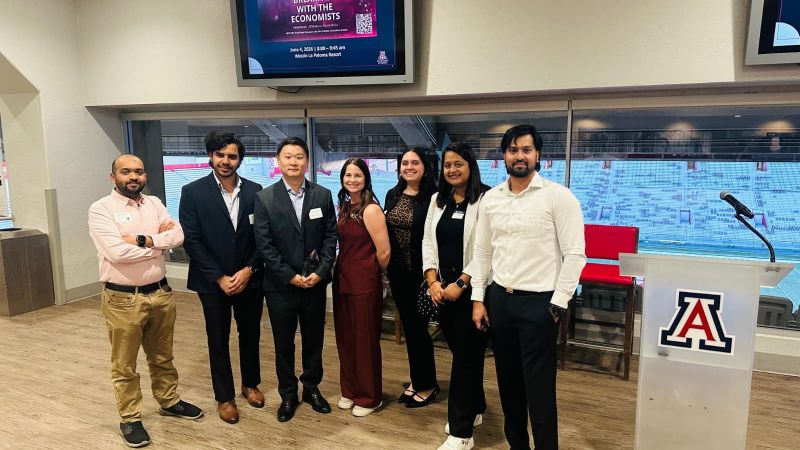
Roche workflow automation and operations engagement presentation.
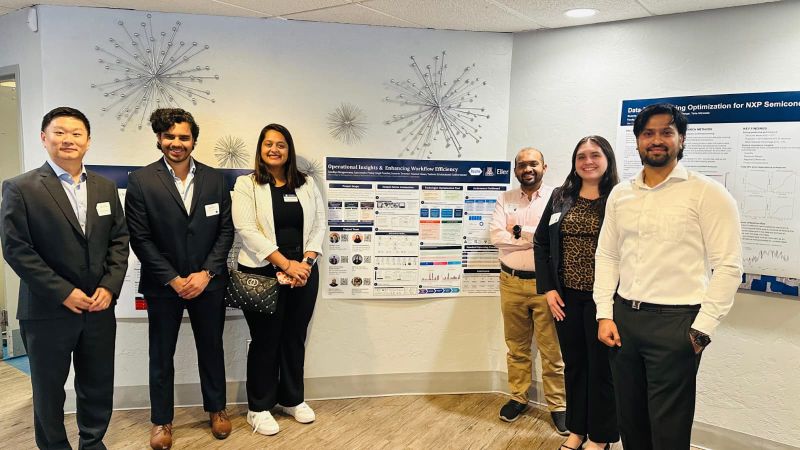
Poster presentation visual for the workflow automation engagement.
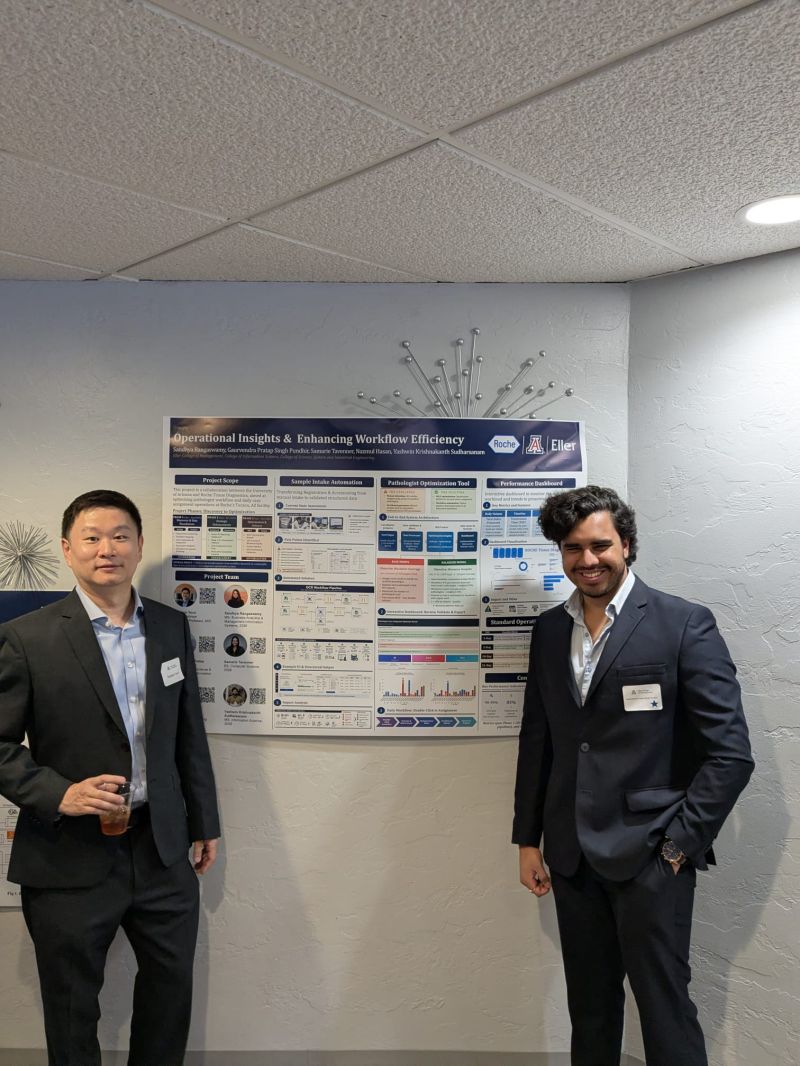
Public-safe presentation media from the engagement.
Impact
The project moved from ambiguity to a structured operational improvement package.
The work gave the team clearer workflow visibility, automation-ready concepts, optimization logic, dashboard framing, and documentation for handoff.
The biggest takeaway was simple: insight is useless without implementation.
If the work cannot be explained, measured, and transferred, it will not survive.
What I learned
This project changed how I think about product and operations.
A dashboard is not valuable because it looks good. An automation flow is not valuable because it sounds efficient. The value comes from whether it changes the day-to-day behavior of the system.
The strongest operational work is not just analytical. It is adoptable.
It needs to fit the real environment, account for constraints, handle exceptions, communicate clearly, and leave behind artifacts that another team can use.