
JFF Horizons Ambassador + Workforce Systems Advocacy
National ambassador work representing student and entrepreneurial perspectives in conversations on learning, work, access, mentorship, and economic mobility.
- ↗ Represented student and entrepreneurial perspectives in national conversations around learning, work, access, mentorship, and economic mobility.
- ↗ Engaged with workforce leaders, educators, funders, policy thinkers, and community builders.
- ↗ Connected the experience back to student-success systems, career clarity, and AI-powered opportunity navigation.
Overview
As a JFF Horizons Ambassador, I represented a student and entrepreneurial perspective in national conversations around the future of learning, work, opportunity, and workforce transformation.
The experience connected directly to the kind of systems I care about building: tools, programs, and communities that help people move from ambition to direction.
The problem
Opportunity systems often fail when education, career pathways, mentorship, and digital fluency are treated as separate problems.
Students and early-career professionals do not only need motivation. They need clearer pathways, trusted guidance, practical exposure, and systems that help them understand what to do next.
That gap becomes even larger for people who do not already have access to strong professional networks, family career guidance, or institutional support.
Why it mattered
JFF Horizons created a space to think about workforce transformation at the ecosystem level.
The conversations were not only about jobs. They were about access, economic mobility, skills, mentorship, technology, learning systems, and the future of work.
For me, the experience reinforced a core belief: career navigation is not just an individual problem. It is a systems problem.
My role
I participated as a Horizons Ambassador and brought my perspective as a student founder building AI-powered career clarity, advising, and interview-readiness tools.
My role included engaging with people across the workforce and education ecosystem, listening to how leaders framed access and opportunity, and connecting those conversations back to the student experience.
I approached the experience through three lenses:
- What do students need to navigate opportunity more clearly?
- How can technology make guidance more accessible without removing human mentorship?
- What kinds of systems help people move from exposure to action?
Product and systems lens
This experience helped me think beyond a single product.
Workforce innovation requires more than an app, a platform, or a one-time program. It requires the connection between:
- Career clarity
- Mentorship
- Digital fluency
- Employer access
- Learning pathways
- Community support
- Institutional trust
- Tools that reduce friction
That systems view connects directly to the work I am building through PathWise and related education/workforce AI projects.
Visual proof
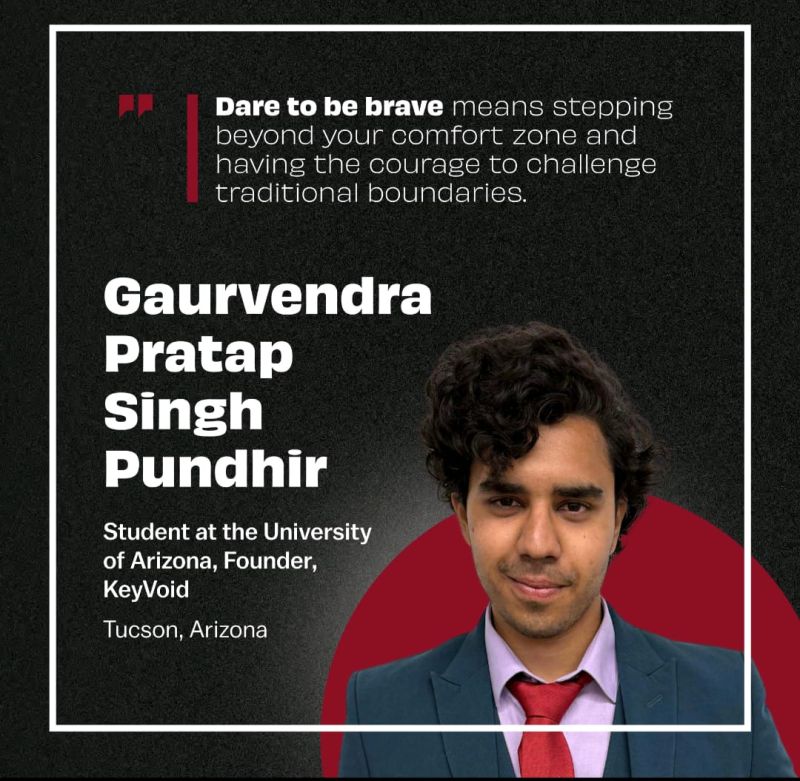
JFF Horizons Ambassador profile card.
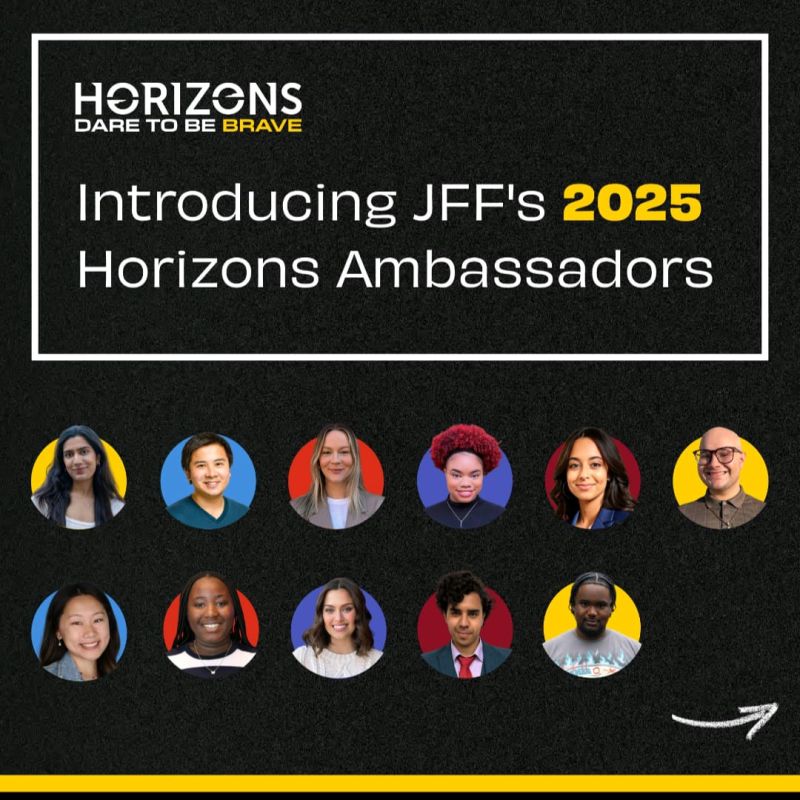
JFF Horizons 2025 Ambassadors announcement.
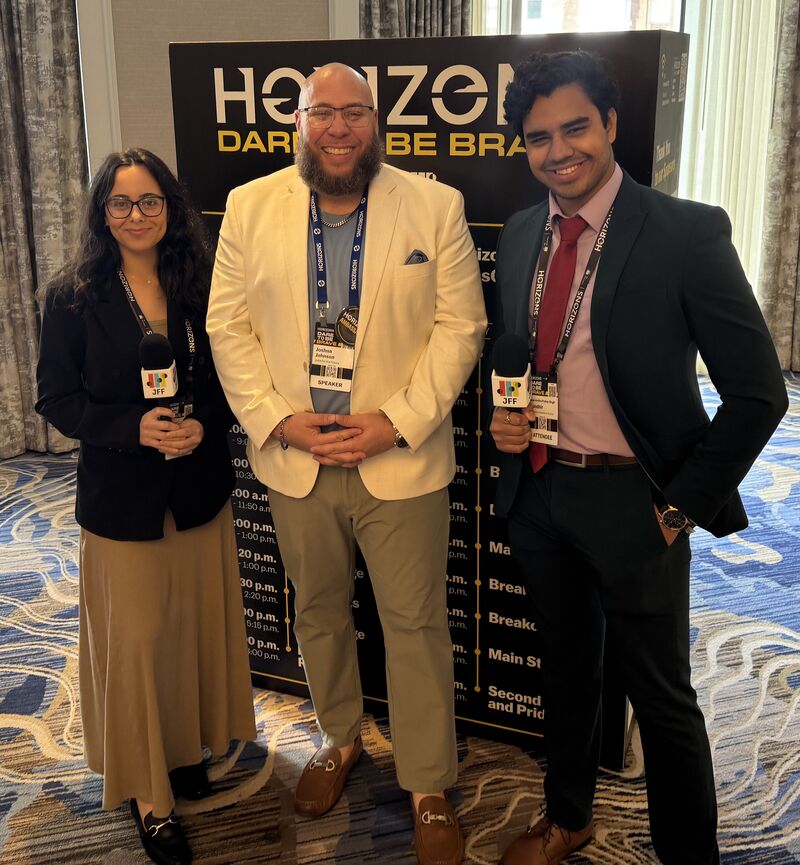
JFF Horizons ambassador event photo.
What I learned
Workforce innovation is not only a product problem. It is an ecosystem problem.
The strongest solutions connect access, mentorship, digital fluency, career clarity, and community support.
This experience sharpened how I think about building tools for students and early-career professionals. The goal is not just to give someone information. The goal is to help them understand their options, build confidence, take action, and connect with the right people at the right time.